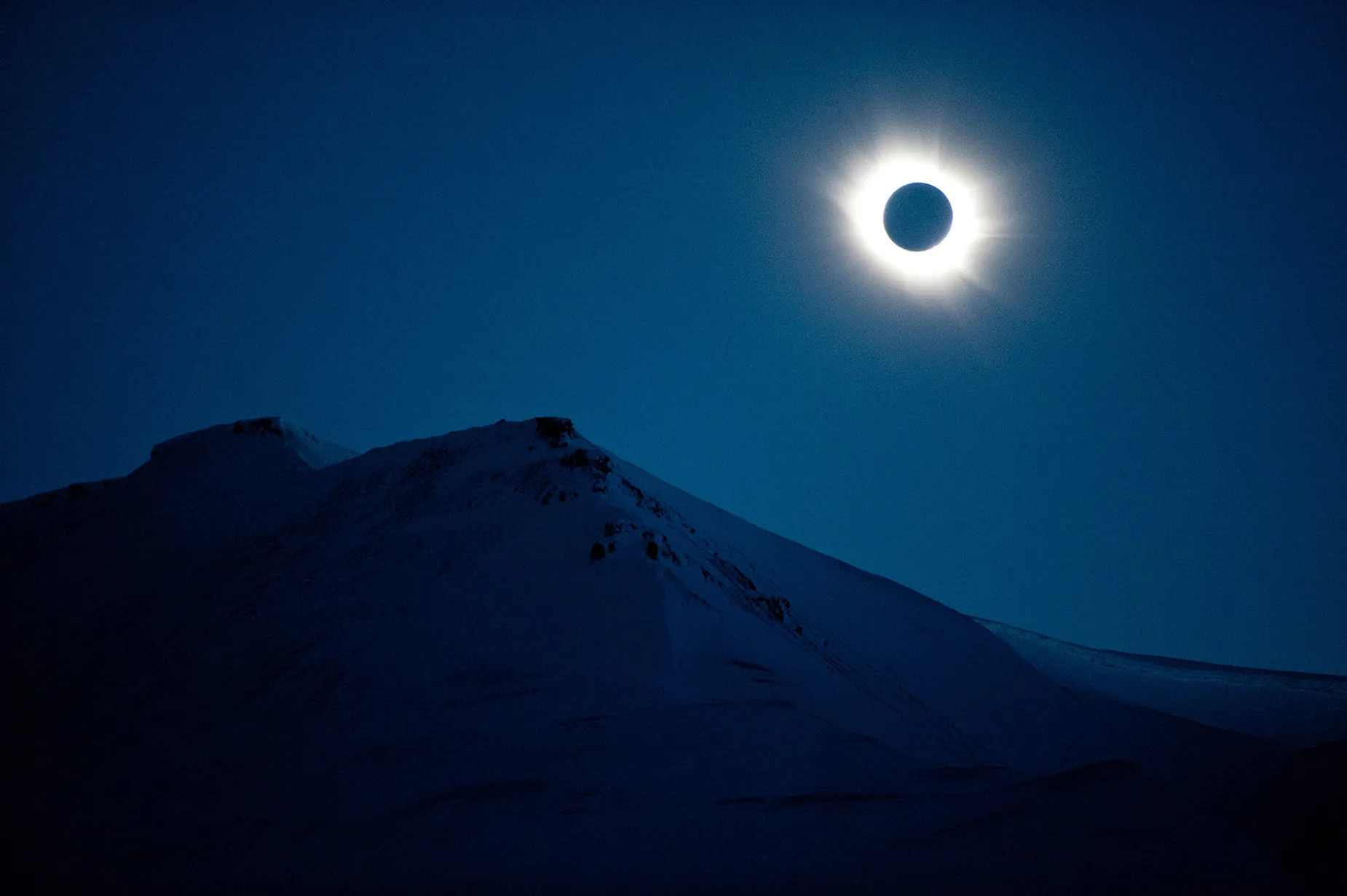
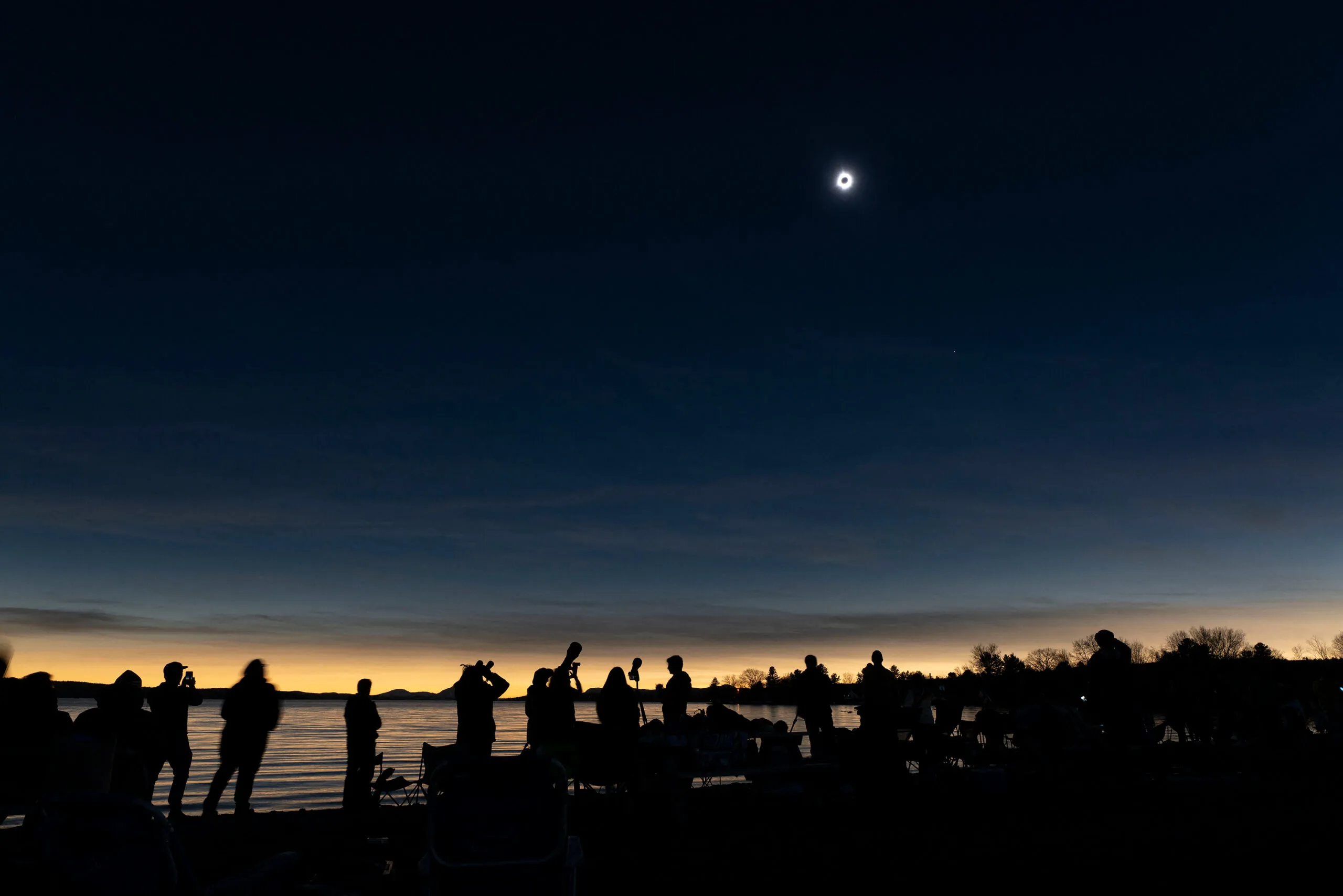
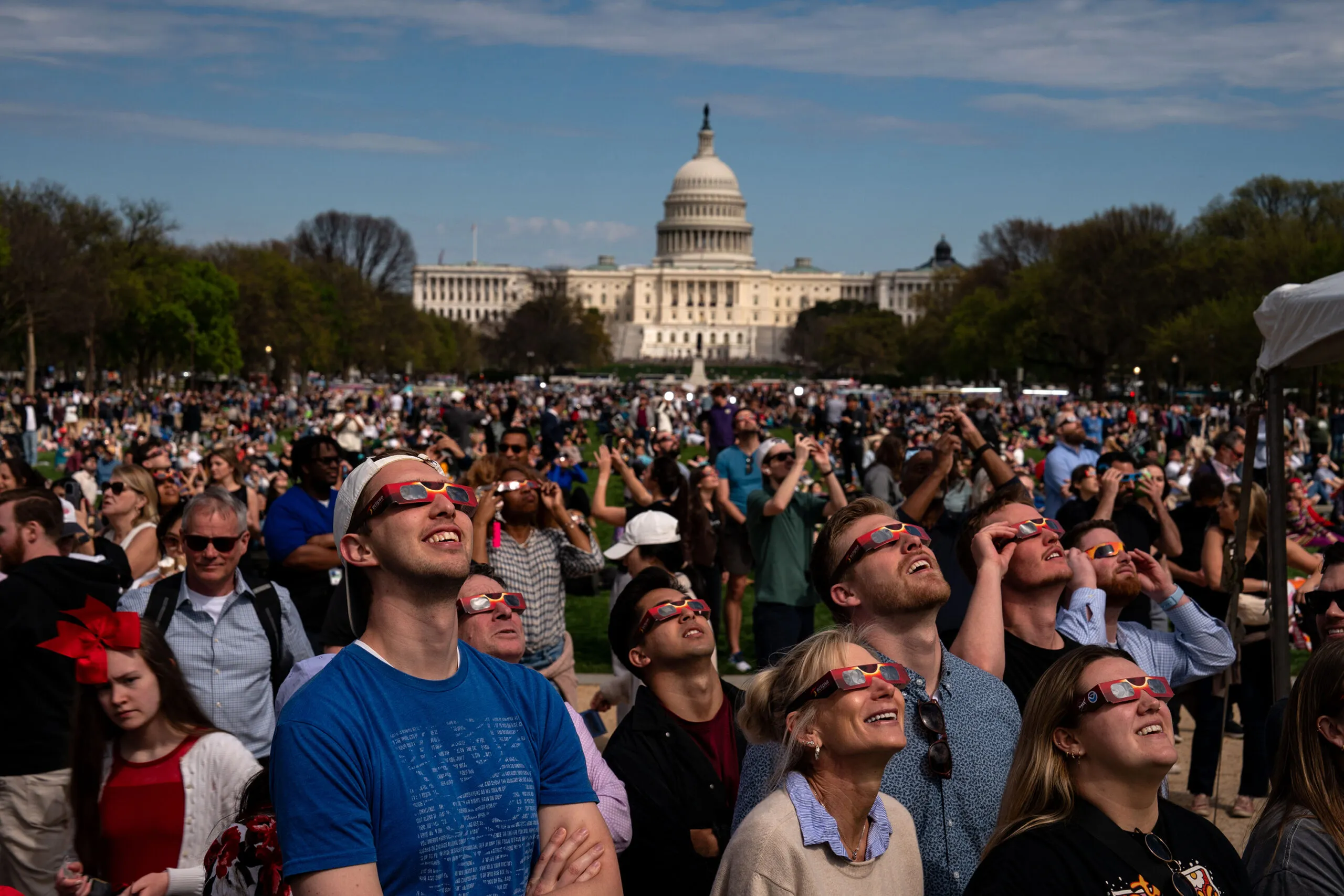
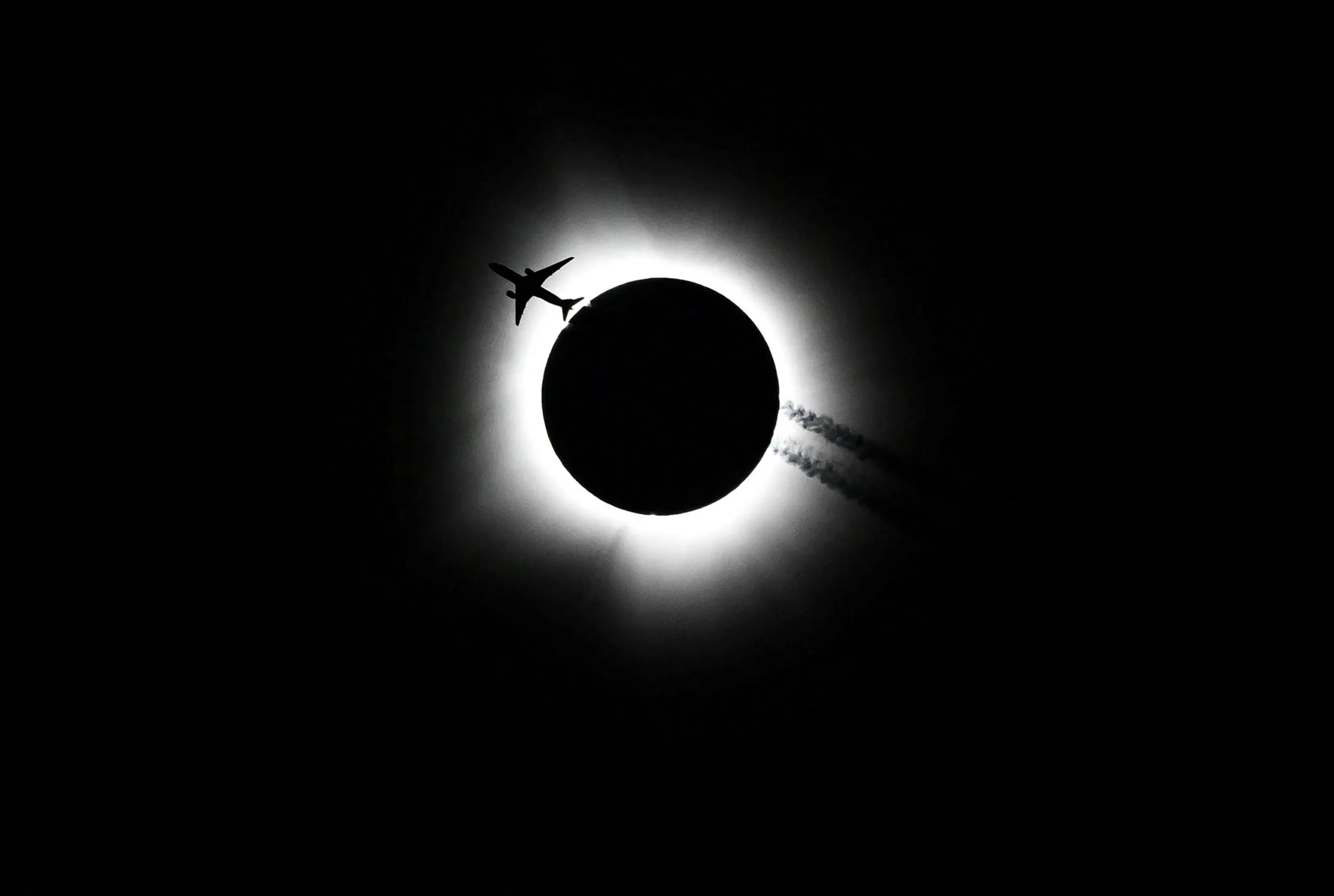
Guests watch the final moments before the total eclipse at the football stadium at Southern Illinois University in Carbondale, Illinois, U.S., August 21, 2017. Location coordinates for this image are 37°42’25” N 89°13’10” W. REUTERS/Brian SnyderTOPSHOT – A total solar eclipse can be seen in Svalbard, Longyearbyen, Norway, on March 20, 2015. A partial eclipse of varying degrees is visible, depending on weather conditions, across most of Europe, northern Africa, northwest Asia and the Middle East, before finishing its show close to the North Pole. AFP PHOTO / NTB SCANPIX / JON OLAV NESVOLD +++ NORWAY OUT (Photo by NTB SCANPIX / AFP) (Photo by -/NTB SCANPIX/AFP via Getty Images)People observe the solar eclipse, in Torreon, state of Coahuila, Mexico April 8, 2024. REUTERS/Daniel BecerrilThe moon covers the sun during a total solar eclipse across North America, in Magog, Quebec, Canada, on April 8, 2024. This year’s path of totality is 115 miles (185 kilometers) wide and home to nearly 32 million Americans, with an additional 150 million living less than 200 miles from the strip. The next total solar eclipse that can be seen from a large part of North America won’t come around until 2044. (Photo by Stan Honda / AFP) (Photo by STAN HONDA/AFP via Getty Images)WASHINGTON, DC – APRIL 8: People gather on the National Mall to view the partial solar eclipse on April 8, 2024 in Washington, DC. People have traveled to areas across North America that are in the “path of totality” in order to experience the eclipse today, with the next total solar eclipse that can be seen from a large part of North America won’t happen until 2044. (Photo by Kent Nishimura/Getty Images)An airplane passes near the total solar eclipse during the Hoosier Cosmic Celebration at Memorial Stadium in Bloomington, Indiana, U.S. April 8, 2024. Bobby Goddin/USA Today Network via REUTERS
NO RESALES. NO ARCHIVES. MANDATORY CREDIT TPX IMAGES OF THE DAY